
 In honor of next month’s National Estate Planning Awareness Week, let’s examine three common errors in estate planning through the lens of notable celebrities. Pay particular attention to how the mistakes can be made by anyone regardless of wealth.
The Chaos of Intestacy
Prince was known for his artistic ability, independence, exacting standards and his ability to plan his musical recordings and performances with meticulous detail. At his death in 2016, when he left no will, he had no wife or children, and both his parents were dead.
Under Minnesota intestacy law, that meant his entire estate went to his siblings and half-siblings in equal shares. What ensued was a prolonged six-year legal battle that illuminated critical estate planning missteps, ultimately leading to disputes among 45 potential heirs, valuation disagreements and the sale of intellectual property rights.
Testacy or Is It Intestacy?
Aretha Franklin passed away in 2018 from pancreatic cancer without a formal, attorney-drafted will, leaving an estate estimated at $6 million–$80 million, including multiple homes, personal property and music royalties. After her death, her niece, Sabrina Owens, discovered two handwritten wills: a notarized 2010 will locked in a cabinet and a 2014 will found in a spiral notebook under couch cushions. The wills conflicted on key provisions, including property distribution and educational requirements for her sons.
The dispute primarily involved Franklin’s sons: Ted White II, Kecalf Franklin and Edward Franklin, with Clarence Franklin under guardianship and not actively involved. The 2010 will, notarized and drafted by legal counsel, included conditions such as educational requirements for two sons. The 2014 will, handwritten and signed by Franklin, omitted these conditions and allocated her main Bloomfield Hills home to Kecalf Franklin.
A jury trial was held in July 2023 in Oakland County Probate Court, Michigan, to determine which will reflected Franklin’s final wishes. Despite the 2014 will being a holographic (handwritten) document and not notarized, the jury concluded it was valid and superseded the 2010 will. The trial lasted only a short time, with the jury reaching a decision in about an hour.
Following the jury’s decision, the court implemented the 2014 will’s provisions distributing specific pieces of realty to three sons and dividing the music royalties among all four sons. Nearly half of the royalties were needed to pay off Aretha’s delinquent income taxes. The resolution ended a five-year legal battle, allowing the family to move forward and highlighting the complexities of holographic wills and estate planning.
The litigation underscores the importance of formal estate planning. Holographic wills, while valid if properly executed, are more susceptible to challenges, potentially prolonging probate and creating family disputes. Aretha Franklin’s case illustrates how even high-profile estates can face significant legal hurdles without clear, attorney-prepared documentation. Executors and beneficiaries must navigate probate carefully, especially when multiple wills exist. The litigation could have gone on longer had not Aretha’s children agreed to her niece administering the estate.
The Offer That Was Never Made
Marlon Brando as The Godfather made several offers to associates that could not be refused. Marlon Brando’s estate litigation revolved around whether the actor in fact made an offer to an employee. Angela Borlaza was originally hired as Brando’s housekeeper and later assisted in other ways. After Brando’s death, his executors evicted her from the home she claimed Brando purchased for her in 2002. The executors planned to sell the residence.
Ms. Borlaza filed suit against the estate. She alleged Marlon Brando’s will was altered while his conditions left him “incapacitated, confused, medicated and noncommunicative.” Although the exact terms were private, Angela Borlaza wound up settling for $125,000.
The lesson here is that in estate dissolution, a promise is never actually a promise until it is in writing. That is the only thing that can be verified in a court of law.
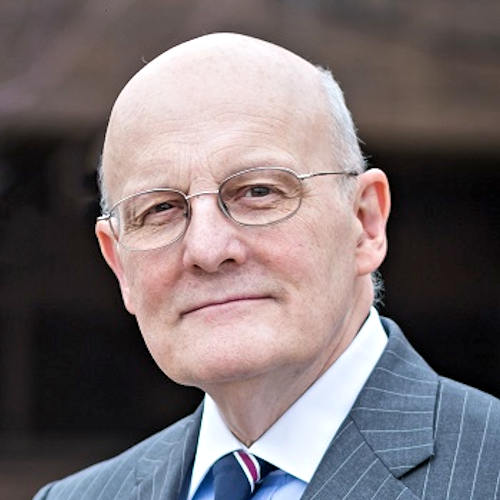 A magna cum laude graduate of Cornell University, Christopher P. Woehrle earned his JD and LLM (Taxation) from the Widger School of Law at Villanova University, where he is also a member of the Graduate Tax Program Advisory Board. Chris is a member of the Pennsylvania Bar and teaches charitable gift planning and principles of wealth management in the LLM taxation program at the Widger School of Law. You can connect with Chris by email.
