In this digital age, email communication is convenient, quick and efficient. However, for most planned and major gift donors, there’s still something special about receiving a well-thought-out card, note or letter in the mail. Here are some tips for crafting the perfect correspondence.
What’s in a name
The appropriate salutation depends on how well you know the donor. If you are writing a thank-you note to a donor you know on a first-name basis, “Dear Harriet” is appropriate. However, if you are writing to a donor you have never met or do not know well, address your correspondence to “Mrs. Jones.” A good rule of thumb is to continue to address older donors formally until they request that you call them by their first names.
Remember to always double-check the spelling of the donor’s name and to use the correct title when appropriate. Medical doctors, PhDs, JDs, clergy, married women, single women, etc., may have titles and/or suffixes they expect to see. Be especially wary of the use of the “Ms.” salutation with senior women as some will still prefer “Miss.”
After you determine your donors’ preferences, be sure your donor data reflects this.
Who’s it from?
If you won’t be writing the letter, a testimonial from a volunteer or an actual donor can be compelling. There is nothing quite as moving as the personal story of a donor’s affiliation with the organization told in their own words.
Another alternative is to ask your CEO or board chair to write certain letters, such as a thank-you for significant gifts or an annual appeal mailing. And a letter from a person who has benefited from the organization or institution is a wonderful way to show how gifts are being used.
The eyes have it
Whether it is a letter for a mass mailing or a handwritten thank-you note, any correspondence should be printed or written neatly so it is easy to read. In the case of printed letters, consider the font size and ink color. Is the font large enough and dark enough for older readers to read comfortably? Larger type (at least 12 point) is a must for older eyes.
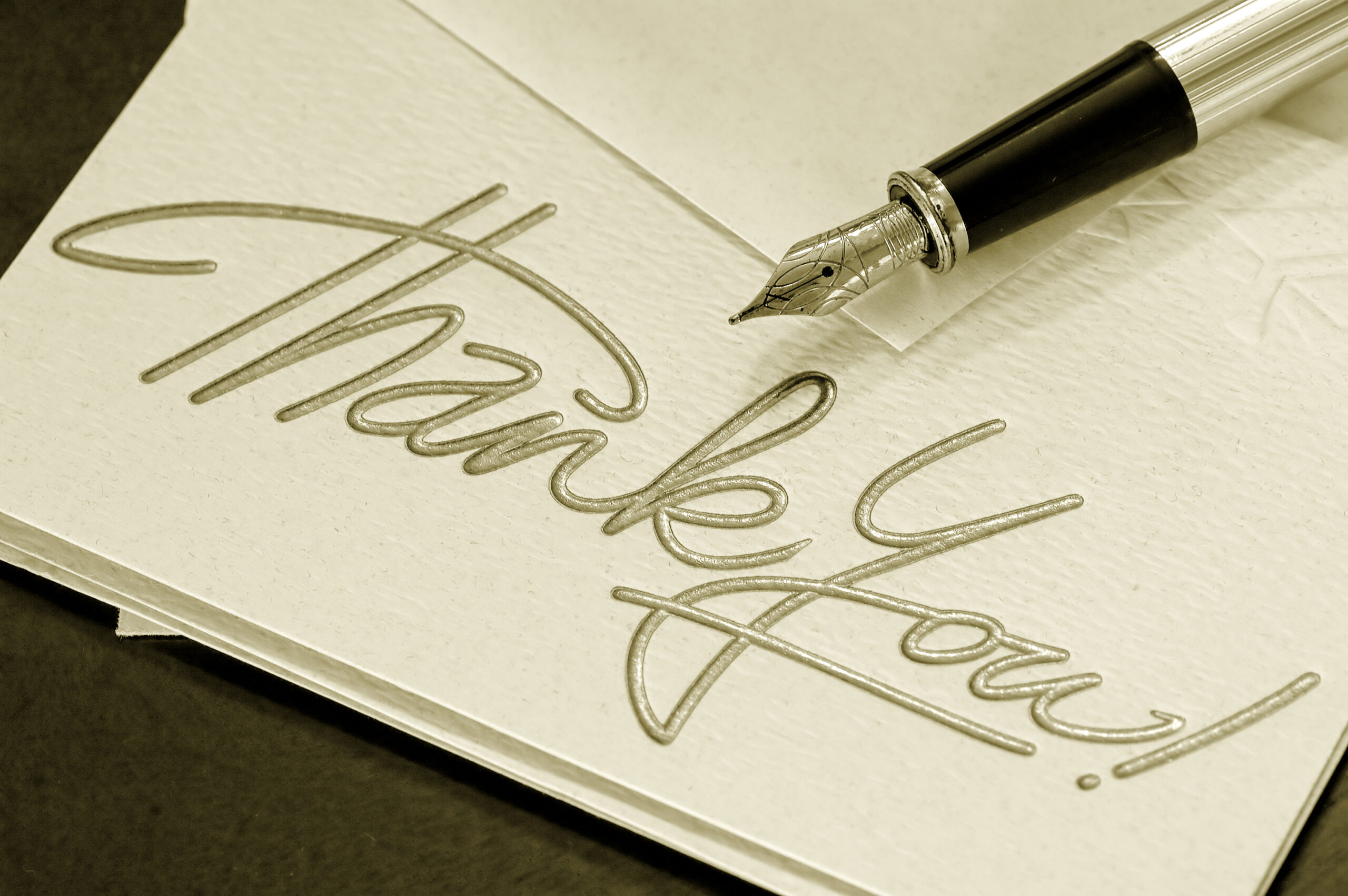
Handwritten notes can have a powerful impact because they are seen as personal and not another mass communication. Get-well, anniversary, sympathy, holiday, birthday and other cards that are signed and hand addressed will stand out.
Emily Post would approve
Carefully thought-out correspondence to donors is more than just a matter of etiquette or good manners. The cards, notes and letters you send show donors that you care about what you do and the impression you make. And when they know you care, they are more likely to care as a result. ■
